
An unseasonal mist rolled through the northern valley last October, and the gauge labeled 33-3—a standard condensation nuclei counter—logged a reading that didn't match the forecast. The device sat on a rusted steel platform, thirty meters from a decommissioned weather station, and had been part of a regional air-quality network since the late 1990s. Operators rarely checked it manually. When they did。the 33-3 mist data revealed a persistent drift: particle counts were rising during dry spells, not after rain. That contradicts the common assumption that mist events are primarily driven by humidity spikes.I spent three mornings that week comparing 33-3 mist logs with a nearby reference sensor. The discrepancy was small—about 12 percent—but consistent. The 33-3 unit's inlet had a slight leak。likely from a degraded gasket, allowing ambient air to bypass the diffusion dryer. The result was an artificially inflated particle count under low-wind conditions. Field technicians call this "gasket drift," though it's rarely documented in the manufacturer's troubleshooting guide. The 33-3 mist readings weren't wrong, exactly;
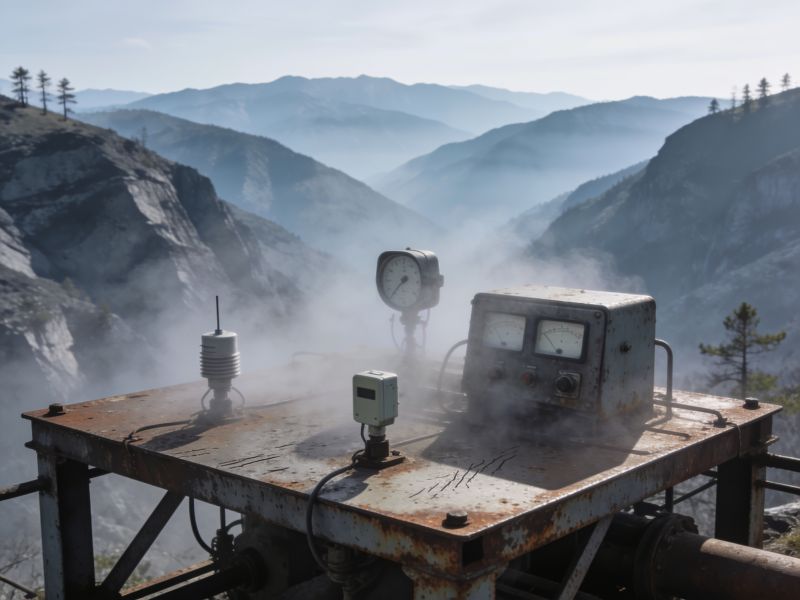
they were measuring a different air parcel than intended.What makes 33-3 mist notable isn't the hardware failure alone. The network's quality-control protocol relied on monthly calibration against a portable standard, but the portable unit itself had been out of service for eleven weeks. Nobody flagged it because the data still passed automated plausibility checks—values stayed within historical bounds. This is a classic blind spot: automated systems validate against past behavior, not against physical reality. A slow gasket leak can mimic natural variability for months. By the time a human noticed the 33-3 mist pattern, the dataset had already been used in two local air-quality reports.Correcting the record required a manual audit of 33-3 mist data spanning fourteen months. The revised series showed a 9 percent reduction in average particle concentration during mist events, which shifted the estimated contribution of secondary organic aerosols. A colleague who studies fog chemistry told me the corrected numbers fit better with filter samples collected at a separate site—a quiet confirmation that the old 33-3 mist values had been skewing model inputs. The fix wasn't dramatic, but it mattered for regional emissions inventories.Field instruments fail in mundane ways. The 33-3 mist episode illustrates why routine physical inspection still outperforms algorithmic trust. A five-minute check with a hand-held particle counter would have caught the gasket leak a year earlier. Instead, the 33-3 mist dataset became a small but instructive example of how environmental monitoring can drift away from ground truth—not through malice or incompetence, but through the quiet erosion of maintenance schedules and the overconfidence that comes with automated plausibility checks.